Civil Society Consultant, Researcher & Artist
Diana Ishaqat
Since 2017, I have worked with NGOs and nonprofits across EMEA on socioeconomic development, focusing on civil society, education and employment, and women's rights.
My core expertise lies in project management, communications, and research. My working languages are Arabic, English, and Russian. I have basic conversation skills in Circassian and growing knowledge of Mandarin Chinese.
As a former Chevening and Schwarzman Scholar, I hold two Master's degrees in media and politics: an MA in Media, Campaigning and Social Change from the University of Westminster, and an MSc in Global Affairs from Tsinghua University, a world top 20 university. Previous clients include UN agencies, international NGOs, think tanks, and activist collectives.
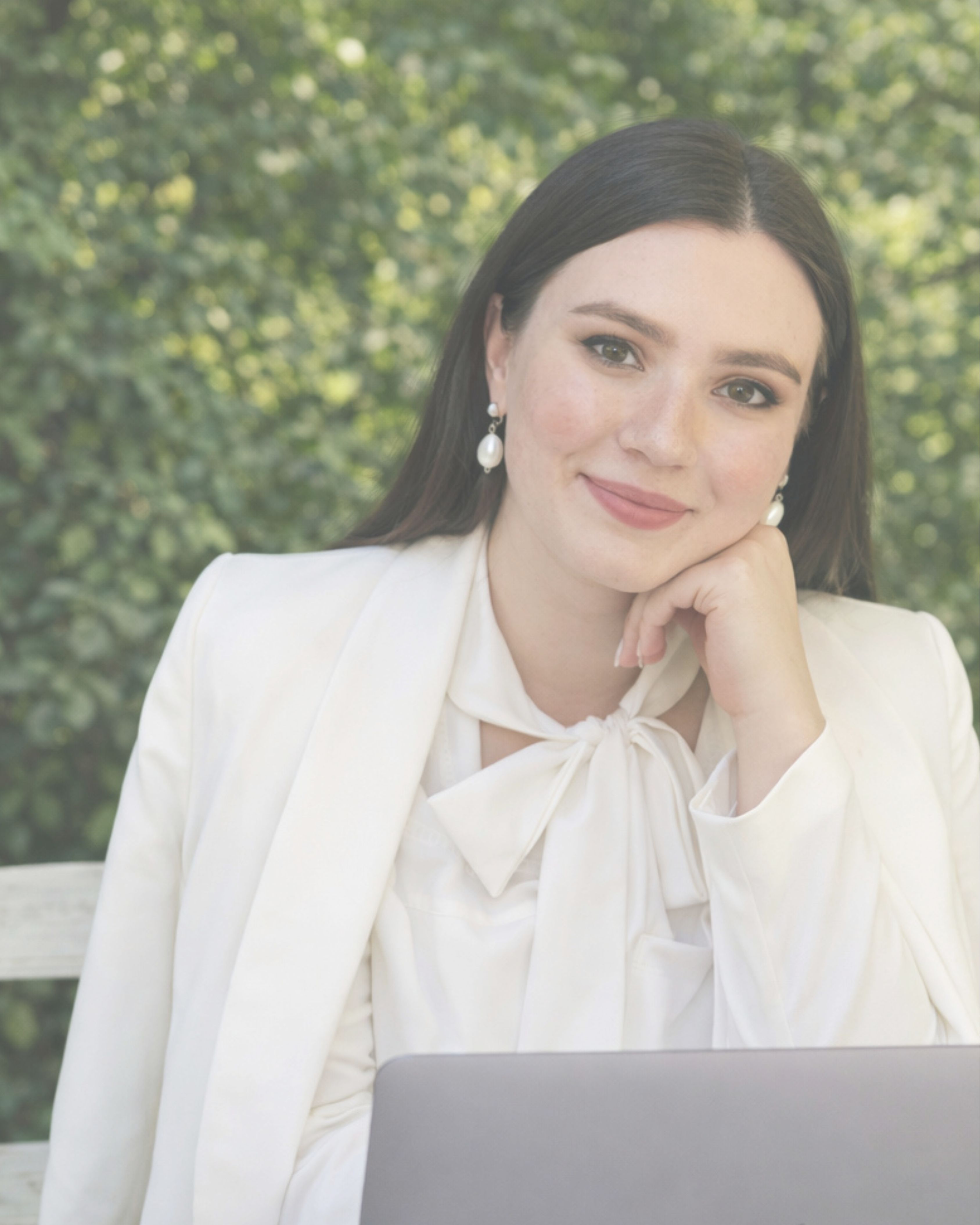
This space showcases my work at the intersection of professional development and social research.
Services
For Individuals
Expert navigation for scholarships, fellowships, and career transitions within the global impact sector, including dedicated support for NGOs and non-profits.
For Organizations
Strategic communications, project management, and research on socioeconomic development, civil society, education and technical training:
Former Clients



Donor Experience



Workshops and Speaking Engagements



Published with
Appeared on

Featured Projects
-
Description text goes here
-
Localisation Study RDPP III | Centre for Lebanese Studies
Jordan & Lebanon | 2023–2025
The Regional Development and Protection Programme (RDPP) is a multi-donor European initiative supporting civil society, host governments, and other stakeholders in Jordan and Lebanon to address the long-term impacts of forced displacement from Syria. As part of its third phase (2023–2026), RDPP commissioned a study to assess how its direct partnership model with local NGOs was advancing — or falling short of — meaningful localisation on the ground.
I led the Jordan component of this research, conducting in-depth interviews and focus groups with a cross-section of stakeholders including local NGOs, sub-grantees, donor representatives, and government officials. I managed the full qualitative research cycle: fieldwork design, data collection, analysis using thematic coding, and synthesis of findings into the final report. The study examined how local organisations experienced RDPP's approach to capacity strengthening, participatory project design, accountability, and power dynamics — and what structural barriers continued to limit transformative change. Published in 2025 by the Centre for Lebanese Studies, the report offers concrete recommendations to donors, host governments, and civil society on how to move localisation from rhetoric to genuine power-sharing.
Co-authors: Shuayb, Brun, Saab, Cathrine | Published by: Centre for Lebanese Studies | Funded by: RDPP / European Commission
-
Visual Facilitation | 5th High-Level Feminist Peace Conference | Peace Track Initiative
Amman, Jordan | November 2025
The 5th High-Level Feminist Peace Conference, held in Amman in November 2025 and organised by the Peace Track Initiative, brought together more than fifty feminist leaders from Yemen and across the Arab region, alongside representatives from regional and international civil society organisations, policymakers, and allies of feminist peace. Nrm-yemen At this convening, I served as a visual facilitator, using live illustration to capture and synthesise complex discussions in real time — making conversations more accessible across language and literacy barriers, and helping participants track the arc of multi-day dialogue. By translating advocacy, testimony, and strategic debate into visual form, the work helped lower the threshold for participation and created a shared, tangible record of the conference's collective thinking on feminist economic frameworks, the protection of civic space, and the role of knowledge in driving transformative and lasting peace.
-
Scholarship Experience Sharing | Community Talks & Civil Society Platforms
Jordan & MENA Region | Ongoing
Winning a Chevening Scholarship to the University of Westminster and a Schwarzman Scholarship to Tsinghua University — two of the most competitive international scholarships in the world — opened doors I once didn't know existed.
Across a series of talks and sessions hosted by community organizations and civil society platforms — including Paper Airplanes, Al Jeel Al Jadeed Club, and the British Council — I've shared the behind-the-scenes reality of applying for and living through these experiences: what the selection process actually looks for, how to write a compelling personal statement, how to navigate the emotional and logistical challenges of studying abroad, and how to make the most of alumni networks and international exposure once you return home. The sessions have been especially aimed at young people in Jordan and the wider Middle East/West Asia region who have the talent and drive to compete globally but lack mentors who've been through the process themselves.
It's a small intervention in a much bigger access problem — but one I keep coming back to.
-
Human & Civil Rights Briefings | European Commission, EU Delegation in Jordan & Others
Jordan & Brussels | 2018 – Present
Since 2018, I have been periodically selected to brief policymakers, diplomats, and institutional stakeholders at events organized by the European Commission, the EU Delegation in Jordan, and other international bodies on the lived realities of communities whose struggles rarely make it into formal policy conversations.
The briefings have focused on three interconnected areas where advocacy remains critically underfunded and misunderstood: the status of women navigating economic exclusion and honor-based violence in contexts where cultural norms and legal frameworks often fail to protect them; the situation of refugees — particularly those rendered invisible by the absence of legal documentation, which locks them out of education, healthcare, employment, and legal recourse; and the experiences of young people facing compounding marginalization at the intersection of poverty, statelessness, and social stigma.
Being invited into these spaces is not something I take lightly. These briefings are an opportunity to ensure that the data and policy discussions happening at the institutional level are anchored in the complexity of what is actually happening on the ground — and that the people most affected by these decisions are at least present in the room, even if only through the words of someone who has worked alongside them.
-
Social Media and Social Change in Jordan | Routledge / Toda Peace Institute
London & San Diego | 2018–2021
I researched how Jordanians use mainstream social media platforms to navigate humanitarian, economic, and political crises — and what this reveals about opportunities for social transformation and civil society programming.
The work began with a policy paper commissioned by the Toda Peace Institute in 2018, whose findings I presented at the Build Peace 2019 conference at the Joan B. Kroc School of Peace Studies, University of San Diego — one of the leading international gatherings on technology, media, and peacebuilding.
The research was later developed into a book chapter published in Social Media Impacts on Conflict and Democracy (Routledge, 2021), examining how platforms like Facebook and Twitter have become critical spaces for public debate, identity negotiation, and socio-political change in Jordan — while also surfacing the gaps and risks that organisations working with disadvantaged communities and refugees must reckon with.
Published in: Social Media Impacts on Conflict and Democracy, ed. Lisa Schirch, Routledge Affiliated with: Toda Peace Institute
-
Disability Rights Ecosystem Mapping | Centre for Lebanese Studies & Education Development Centre
Jordan & Palestine | 2023
As part of a UK Research and Innovation (UKRI)-funded initiative under the Disability Under Siege programme, I mapped disability rights ecosystems and advocacy networks across Jordan and Palestine, contributing to one of the first empirically grounded efforts to document deinstitutionalisation of persons with disabilities in the Middle East.
The project brought together a network of UK- and MENA-based universities and researchers to address a critical gap: the near-total absence of regional research on how institutionalisation affects children with disabilities' access to education — particularly in contexts of conflict and occupation.
My work produced strategic insights that informed research agendas and programming across the network, and contributed to a broader mapping report identifying key local, regional, and international organisations working on deinstitutionalisation — laying the groundwork for South-South and North-South partnerships in the field.
Partners: Centre for Lebanese Studies, Education Development Center, Disability Under Siege Funded by: UKRI, Open Society Foundation
-
Career & Education Blog Series | For9a × Deutsche Welle
Jordan & MENA Region | Online
For9a — Arabic for "opportunity" — is one of the Arab world's leading platforms for career development and employment, connecting millions of young job-seekers across the MENA region with opportunities, guidance, and resources in both Arabic and English. In partnership with Deutsche Welle, the internationally renowned German public broadcaster with a strong Arabic-language presence across the region, I contributed a series of career and education blogs targeting young Arab professionals navigating an often opaque landscape of opportunity.
The series covered practical, high-demand topics: how to write competitive job applications, identify scholarships and funding opportunities, decode the often confusing terminology that appears in international application forms, and understand the differences between key concepts that frequently get lost in translation between Arabic and English. Drawing on my own experience as a Chevening and Schwarzman Scholar, as well as years of working across international development and civil society, the pieces were written to be genuinely useful — grounded, accessible, and bilingual in their framing — for readers who are ambitious but may lack access to the kind of insider knowledge that makes these processes less intimidating.
Get in Touch
Civil Society Consultant, Researcher & Artist
Diana Ishaqat
Since 2017, I have worked with NGOs and nonprofits across EMEA on socioeconomic development, focusing on civil society, education and employment, and women's rights.
My core expertise lies in project management, communications, and research. My working languages are English, Arabic, and Russian, with growing knowledge of Chinese.
As a former Chevening and Schwarzman Scholar, I hold two Master's degrees in media and politics: an MA in Media, Campaigning and Social Change from the University of Westminster, and an MSc in Global Affairs from Tsinghua University, a world top 20 university. Previous clients include UN agencies, international NGOs, think tanks, and activist collectives